+61 (8) 9246 4066
 Suite 1, 64 Arnisdale Road,


- We have moved to Duncraig
-
 +61 (8) 9246 4066
-



Taping, Bracing and Strengthening - The Evidence

Taping, Bracing and Strengthening
As the Physiotherapist for a large sporting club, a question I am commonly asked is “should I tape or brace my ankles?” In order to best answer this question, it is important to explore the basis behind taping, bracing and strengthening. Please continue reading to see an overview of the literature of prevention and rehabilitation of acute ankle injuries and the strengths and weaknesses of taping, bracing and strengthening in these periods. By presenting this evidence to you I hope that you will be able to make a well-informed decision, together with your Physiotherapist about either yours or your child’s ankles.
Prophylactic Ankle Taping and Bracing (Prevention!)
Taping or bracing is documented to reduce the risk of acute ankle sprains in athletes. However, current evidence suggests that taping and bracing is more effective in those with a history of ankle sprains in comparison to those without a history of ankle sprains. It was long thought that the protective reason behind ankle taping was to improve joint position sense. However, Jansenn and Kamper (2012) found that this was not the case. Whilst the exact mechanism behind how taping is effective is unknown, there is strong evidence to suggest its efficacy and therefore its application should not be discouraged.
Another study found that lace up ankle braces reduced the overall incidence of ankle injuries but not the severity in high school aged basketballers with and without a history of ankle sprains (Mcguine et al, 2014).
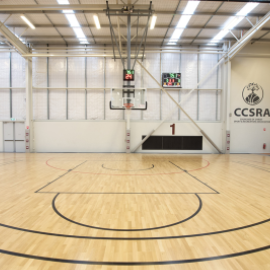
An important factor to consider is that the initial significant protection of external ankle support declines almost completely within 45 minutes of exercise (Best et al, 2014). Thus, when playing a game of Basketball, it is important to consider this as a possible contributing factor towards injury.
The literature surrounding taping and bracing commonly notes that it is important that individual preferences be considered when deciding whether to tape or brace. Therefore, taking your preferences into account will be important in our decision making for what will best suit your individual needs.
Taping as a form of acute injury management
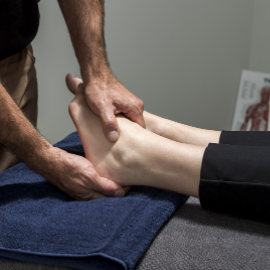
For a number of years (as long as I can remember!) the RICE (Rest, Ice, Compress and Elevate) acronym has maintained importance for acute injury management. Whether working with elite athletes or weekend warriors, these rules apply. Taping the ankle immediately after spraining it dramatically improves the prognosis. There is no better form of compression for an acutely injured ankle than taping. Immediate taping reduces swelling, improves tissue healing and results in less time overall on crutches and therefore less time off the court. So if you roll your ankle it is important to get to us as soon as possible!
Taping vs Bracing overview
When considering whether taping or bracing is more effective for you or your child, cost and time effectiveness should be considered. While athletes feel less comfortable wearing ankle braces in comparison to having their ankles taped, ankle braces are more beneficial in terms of cost effectiveness.
Another point that should be raised when considering ankle support is the choice of footwear. In Reeves and colleagues (2015) study, high top shoes with ankle taping had more than 50% fewer ankle injuries than those wearing low top shoes with ankle taping during high school level basketball. Therefore, high top basketball shoes are far better at supporting the ankle than low cut shoes and should be considered in the management of ankle injuries.
Ankle Strengthening and Exercise Rehab
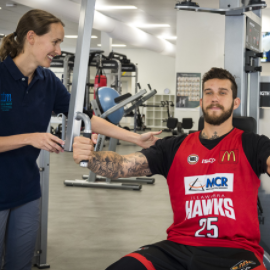
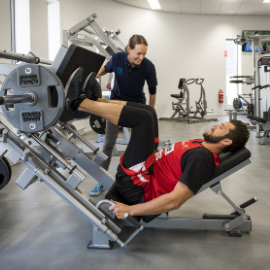
The evidence for bracing and taping is not comprehensive. The majority of published studies in the literature state that ankle taping and bracing should not be used in place of rehabilitation but should be used in conjunction with it. One study conducted on the use of balance training for reducing reoccurring injury rates in high school basketballers, found that 15 minutes of wobble board training for 12 weeks resulted in a 29% decrease in reoccurring injury rates when compared to those who did not complete wobble board training. Additionally, implementing one hour per week of supervised ankle rehabilitation and prevention exercises focusing on balance resulted in a clinically significant reduction in sprains.
Overall, there is a place for all three of the taping, bracing and strengthening. However, in order to prevent the actual injuries themselves, regular strengthening, balance and sport specific drills should be completed to prevent ankle injuries.
If you have any questions or want to know more about ankle rehab/prehab then please feel free to come into the clinic and say hi.
Written by Matt Beavis

Ask a physio
Not sure whether you are appropriate for Physiotherapy?
Fill out the form and one of our physiotherapists will be in touch with you within 24 business hours.
Follow us on