+61 (8) 9246 4066
 Suite 1, 64 Arnisdale Road,


- We have moved to Duncraig
-
 +61 (8) 9246 4066
-



Summer Body Series

As everyone begins their adventure for the "perfect" summer body, our physios will guide you through the most common injuries that occur when you first start to exercise. The first instalment of MTM Physiotherapy Warwick's summer body series is on Plantar Fasciitis.

What is it?
As the name suggests Plantar fasciitis is an inflammation of the plantar fascia of the foot. The plantar fascia is a band of thick connective tissue that runs from the heel bone through to the base of the toe bones. The role of the plantar fascia is to support the arch of the foot when in standing or any other weight bearing activity. As well as a supportive role, the plantar fascia is important when walking. The plantar fascia elongates and shortens like a spring helping to conserve energy, this is called the windlass mechanism.

Who does it affect?
Plantar fasciitis commonly affects both the active and sedentary population. Active people who place an unaccustomed load through the plantar fascia can experience tightening up of the fascia in the foot. In addition, workers who are on their feet all day or overweight people can experience plantar fasciitis due to the pressure on the feet. As Plantar fasciitis is an inflammatory condition, generally it is worse first thing in the morning and then improves with activity. The general progression of Plantar fasciitis is as follows:
- NO foot or heel pain
- Pain before activity
- Pain before and after activity
- Pain before, during and after activity
- Pain ALL the time! Even when resting!!
How do we treat it?
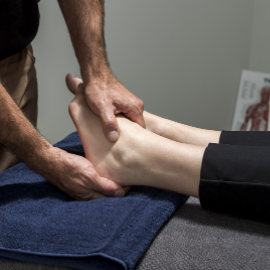
Once the cause of your foot pain is established by one of our Physiotherapists, we will be able to guide you through the appropriate management plan. Best practice management of Plantar Fasciitis generally consists of a multimodal approach (like most other conditions). Ultrasound to either the proximal or distal attachment sites of your plantar fasciitis is effective in reducing the swelling and inflammation in that area. Furthermore, deep tissue massage to the plantar fascia is effective in trying to lengthen the tissue. This results in less pulling on its bony attachments. All of our Physiotherapists believe that tape is an effective adjunct to the treatment of plantar fasciitis as it supports and offloads the tissue.
Home management is also super important in the treatment of plantar fasciitis. As it is an inflammatory condition, ice is very good! We think the best way to manage it, is to freeze a 600ml water bottle and roll it up and down the plantar fascia. This way it combines the ice with the massage. Furthermore, once the fascia is lengthened and offloaded sufficiently it is important that we then strengthen it appropriately so it is able to withstand the load placed through it. All of these home management techniques and exercises will be prescribed at the appropriate times by your Physiotherapist.
If you are experiencing foot pain don't leave it any longer! Come in and see one of our friendly and experienced Physiotherapists so we can provide you with a comprehensive assessment and guide you on your way to recovery.

Ask a physio
Not sure whether you are appropriate for Physiotherapy?
Fill out the form and one of our physiotherapists will be in touch with you within 24 business hours.
Follow us on