+61 (8) 9246 4066
 Suite 1, 64 Arnisdale Road,


- We have moved to Duncraig
-
 +61 (8) 9246 4066
-



Non Traumatic Injuries

In following on from our recent blog about Traumatic Football injuries, we will now take a look at the Non Traumatic Football injuries.
Femoroacetabular Impingement (FAI)
FAI is a hip condition which explains a mismatch in the hip joint. There are three different types of FAI. Cam type FAI describes a bump on the femoral head (the ball) which jams on the acetabulum (socket). This seems to be the most common type of FAI that footballers (especially young footballers) suffer from. Pincer type FAI is where there is an increased area of the acetabulum (socket) over the femoral head (ball) and the third type is a mixed presentation which is a combination of the two.
Whilst an anatomical issue, the hip must also be provoked in some manner to cause this presentation. Common symptoms include restricted hip range of motion (flexion and internal rotation), pain down the leg or deep in the groin, aggravated by sport or by sitting (especially crossed legs).
Physiotherapists are also trained to recognise PERTHE’s or SUFE which are specific growing pathologies of the hip joint that require immediate specialist review. Medical imaging is useful for hip pain in developing athletes.
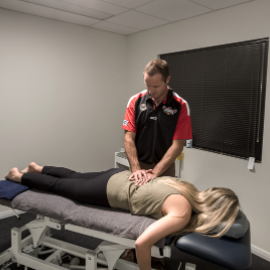
Physiotherapy is extremely beneficial for footballers who have FAI, we use various soft tissue and joint mobilisation techniques to improve tissue flexibility and joint range of motion. Once able, we will progress you from mobility exercises to strengthening exercises to ensure that all the musculature around the hip are functioning as best as possible. We will also guide you through a sensible loading and return to sport program.
Patellofemoral Pain Syndrome
Patellofemoral pain is a common knee injury that affects up to 20% of the population. The patellofemoral joint is where the knee cap joins the groove of the thigh bone. Problems occur when there is an overload to the patellofemoral joint. This is generally an injury that will arise after a period of increased training load, especially running. This knee pain is characterised by pain at the front, side or behind the knee, pain with weight bearing activities such as squats, lunges and running. The pain may also be accompanied with a clicking grinding sensation.
Physiotherapy and load management is critical in the rehabilitation of footballers who have patellofemoral pain syndrome. Hands on treatment is directed at improving mobility of the knee cap as well as improving muscle length around the hip and knee joint. It is essential that a graded exercise and return to running program is set up to ensure that the control of the knee is improved. Taping can be quite effective for people who have patellofemoral pain syndrome.
Severs Disease
Severs Disease is an inflammation of the growth plate in growing children. Severs is caused by a repeated overload and stress to the heel. With the demands of junior football where training can be 2-3 times per week and 1 game, mixed in with all the other sporting demands of growing children, Footballers are at an increased risk of developing this.
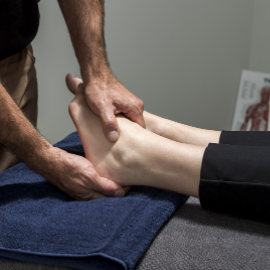
Severs Disease is relatively self limiting and Physiotherapy is very effective in the management of this condition. Soft tissue release to the muscles in the foot and calf are effective as well as taping and a home exercise program to increase mobility. In the very acute stages of Severs, therapeutic ultrasound may also be effective. Once the pain has settled, your Physiotherapist should map out a clear return to Football plan, focusing on maintaining the improvements made in clinic and incorporating some running and return to play guidelines. As Severs is a growing condition, children are at an increased risk of flaring up again each time they grow. Based on this, it is important that the rehabilitation is continued even when symptom free.
Tendon Injuries
The main tendon that is injured in Footballers is the Achilles tendon. Other tendons that can be irritated are the hamstring, patella and gluteal tendons. There has been a mountain of work done by Physiotherapists the past few years in determining the best way to manage these irritated tendons. Based on the literature that has been published, it is essential that a load management plan is established. The worst thing for tendon pain is to completely rest, this has shown to reduce the loading capacity of the tendon.
In your first session of Physiotherapy you should be given some loading exercises of the tendon, these will be progressed smoothly into more functional exercises and finally a return to play program. It is essential that these exercises are followed and that you liaise with your Physio regularly to ensure that the load through the tendon is appropriate for you, there is no one size fits all approach. Whilst the best management is to manage load of the tendon, Physiotherapy is effective in helping you to load the tendon better, this can be done by dry needling or massage to the muscle belly of the affected tendon.
Whether the injury is traumatic or not, Physiotherapists are well placed to coordinate the management of all football injuries. Be sure to make an appointment with one of our Physiotherapist’s to discuss and create a management plan for your injury today.
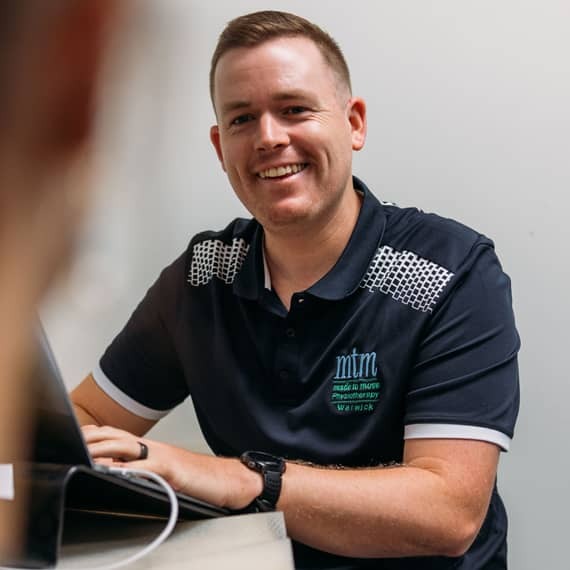
Article written by Matt Beavis (WA Football State Academy Physiotherapist)
Ask a physio
Not sure whether you are appropriate for Physiotherapy?
Fill out the form and one of our physiotherapists will be in touch with you within 24 business hours.
Follow us on