+61 (8) 9246 4066
 Suite 1, 64 Arnisdale Road,


- We have moved to Duncraig
-
 +61 (8) 9246 4066
-



Lateral hip pain: Greater trochaneric pain syndrome
WHAT IS IT?
Previously known as Trochanteric Bursitis, Greater Trochanteric Pain Syndrome (GTPS) is an umbrella term used to describe persistent pain located around the lateral hip (outside of the hip).
It is no longer referred to as trochanteric bursitis, as recent evidence has shown that in people with lateral hip pain there is often no signs of inflammation or swelling in the bursa and when bursitis is present it is almost always a secondary finding associated with the primary pathology of gluteus medius or gluteus minimus tendinopathy.
Glute medius or minimus tendinopathy is the overload of the gluteal tendons where they attach into the side of the hip at the greater trochanter. The most common cause is due to reduced hip and gluteal muscle control, poor postural habits and a recent increase or change in activity.
Greater trochanteric pain syndrome is a complex but common condition affecting between 10-25% of the population and is most prevalent in women (especially those aged 40-60 years). However, it can also occur in young athletes, predominantly runners.

Gluteus Medius and Minimus anatomy, reproduced from Gottschalk et al. (1989) freely available online here.
WHAT ARE THE SYMPTOMS?
- Pain around the outside of the hip and/or buttock
- Pain that can radiate from the hip, down the outside of the thigh to the knee
- Tenderness around the greater trochanter (bony protrusion on the outside of the hip)
- Pain with sitting with legs crossed
- Pain with prolonged standing, especially in a “hip hanging” position
- Pain trying to stand or balance on one leg
- Pain with side lying
- Pain with sitting in low chairs or rising from sitting
- Pain with activities such as climbing stairs, walking up inclines, running or hopping

PREDISPOSING FACTORS:
- More common in women than men (due to the differences in size, shape & orientation of the pelvis)
- More common in postmenopausal women
- Leg length discrepancy & significant spinal scoliosis have been assoc. with glut med tendinopathy
- Poor posture & movement
- Runners who run on a track or a camber (causes one leg to always be slightly adducted)
- Common in those who have other associated conditions such as knee OA, lumbar OA or rheumatoid arthritis
- Obesity
DIAGNOSIS
Diagnosis is not always straight forward as the location of the pain could potentially be referred from elsewhere. GTPS can commonly be seen alongside co-existing hip pathologies and low back pain. Structures in the lumbar spine such as the nerve roots, facet joints, intervertebral discs and ligaments can all refer pain into a similar region to that of GTPS and as a result it can sometimes be misdiagnosed as pain from the Lumbar spine (and vice versa).
An ultrasound of the hip region can be useful to determine the presence of gluteus medius or minimus tendinopathy and/or trochanteric bursitis.
STAGES OF GLUTEAL TENDINOPATHY:
There are three stages of tendinopathy- reactive, early disrepair and degenerative.
The reactive and early disrepair stages are usually an acute response to an excessive load when you have previously never had a problem. For example, this could be due to a change in your activity or training such as walking or running longer distances, climbing more stairs and hills or adding a boot camp or step aerobics class into the mix. Fortunately, if this is managed early on, the tendon is still structurally intact and any changes in the tendon are reversible with correct management of your load.
Degenerative tendons are generally seen in the older population and are a result of chronic overload of the tendon. The connective tissue in the tendon becomes disorganised and can break down resulting in a tendon that is poor at managing load.
A thorough examination by your physiotherapist and appropriate diagnostic imaging can determine the stage of your tendon injury to ensure optimal management.
For more detailed information on the stages of tendon pathology see our blog on Tendon Injuries
PHYSIOTHERAPY TREATMENT
Activity modification
Modifying your activity is an important step in the management of GTPS that our physiotherapists will discuss with you. It may be necessary to unload the hip by reducing/modifying physical activity in the short term. Avoidance of the following aggravating activities or positions which create compression forces in the tendon can be helpful in reducing symptoms:
- No hip hanging in standing
- Avoid crossing your legs whilst sitting
- Do not sit in low chairs (where you hips are flexed > 90 degrees)
- Sleep on your back with a pillow under your knees or on your non-affected side with a thick pillow between your knees and ankles.
Gluteal & core strengthening exercises
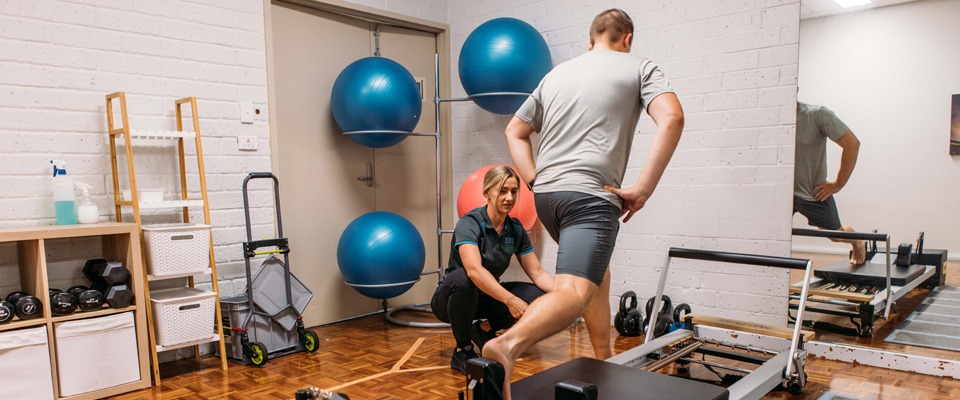
Improving the activation, strength and endurance of the hip, gluteal and core muscles is essential in the treatment of GTPS. Appropriate strengthening exercises prescribed by one of our physiotherapists will improve your ability to control the position of your hip and pelvis in your daily activities and enhance the load tolerance of your gluteal tendons. Clinical Reformer Pilates at MTM Physiotherapy Warwick is an effective method of strengthening the core and gluteal muscles.
Manual therapy
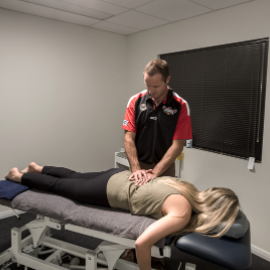
Your physiotherapist may use manual therapy including massage, dry needling and joint mobilisations as appropriate to treat any muscle tightness or joint stiffness that is contributing to your GTPS.
Treatment of other areas
As there can often be co-existing pathology of the lumbar spine or hip joint in lateral hip pain this will be assessed by your physiotherapist and addressed as required.
MEDICAL MANAGEMENT
Your physiotherapist will refer you to a GP or sports physician for a review if medical management is required. In the case of true stand-alone Trochanteric Bursitis (i.e. no gluteal tendon involvement), anti-inflammatory medications and/or cortisone injections can help to reduce the inflammation in the bursa and provide pain relief. Medical management for this condition works best when combined with manual therapy, exercise rehabilitation and a graduated return to activity. Surgery is rarely required for GTPS as it usually tends to resolve with conservative measures.
If you are experiencing pain or symptoms like these, have your hip assessed by a one our experienced physiotherapists at MTM Physiotherapy Warwick today. You can or by calling us book your appointment online on (08) 6244 0345.
Ask a physio
Not sure whether you are appropriate for Physiotherapy?
Fill out the form and one of our physiotherapists will be in touch with you within 24 business hours.
Follow us on