+61 (8) 9246 4066
 Suite 1, 64 Arnisdale Road,


- We have moved to Duncraig
-
 +61 (8) 9246 4066
-



How it works - The Lumbar Spine

Anatomy
The lower back, or lumbar spine as it is anatomically known is made up of five vertebrae. In the anatomical position, the lumbar spine curves into towards the abdomen. This position is called lordosis and together with a thoracic spine kyphosis (away from the chest) and a cervical lordosis the spine forms a nice S shape. The lumbar spine joins the Thoracic spine above it and the Sacral spine below it.
Like all vertebrae, there are multiple components of the spine. Between vertebrae bodies there are fibrocartilage intervertebral discs. The other main joint is the facet joint. A facet joint links two articular processes together.
Like with all joints there are various muscles that cross over and attach to the surrounding bony structures. The lumbar spine is no exception. Some of these muscles in this region are the Erector Spinae, Quadratus Lumborum and Oblique muscles of your abdomen.
Function
The role of the Intervertebral disc is to protect the spine and offer shock absorption. Due to its location, the lumbar spine supports the entire torso therefore shock absorption in the lumbar spine is critical. Facet joints allow for most of the movement in the lumbar spine and are responsible for flexion and extension (forward and backward movement) of the spine. The facet joints also limit excessive lumbar rotation.
Common injuries
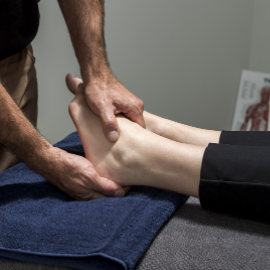
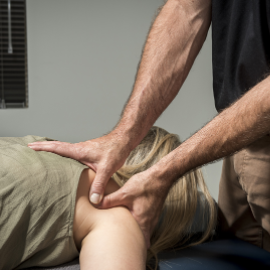
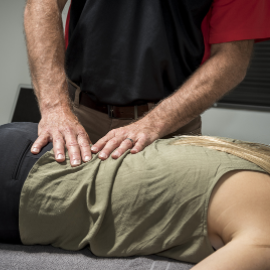
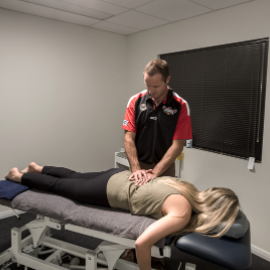
Sometimes a disc can be inflamed, this is generally due to excessive flexion load on your spine, such as too much sitting or heavy lifting with a poor technique. At times, the facet joints can get really stiff also. Hands on Physiotherapy and lots of education and reassurance will produce a favorable prognosis. Other injuries include muscular lower back pain and quite often a whole body approach to back pain (like other injuries) is needed. Your physiotherapist may discuss your stress and beliefs about your pain to ensure they have a good understanding of your presentation.
In terms of general lower back care, it is good to avoid prolonged postures or repetition of the same movements. This is why sitting is not as good as standing and exercise is generally better than rest. We recommend regular positional changes of the spine to ensure that it is constantly moving through its entire range of motion.
If you have lower back issues, why not book online or phone 6244 0345 and book in to see one of our highly trained and experienced Physiotherapists today.

Ask a physio
Not sure whether you are appropriate for Physiotherapy?
Fill out the form and one of our physiotherapists will be in touch with you within 24 business hours.
Follow us on