+61 (8) 9246 4066
 Suite 1, 64 Arnisdale Road,


- We have moved to Duncraig
-
 +61 (8) 9246 4066
-



8 Tips To Prevent Running Injuries

8 Tips To Prevent Running Injuries
Up to 80% of runners can experience an injury in any given year. The majority of these are overuse injuries and are usually caused by training errors. Whether you are a seasoned runner or just starting out, these 10 tips will help keep you up and running!
1. Gradually increase your load
It is important to ensure that you gradually increase your running load to prevent injury. As a general rule of thumb, your weekly kilometres should not increase by more than 10% and the length of your long run should also not increase by more than 10%. This is even more important in novice runners and runners returning from an extended period of time off following injury or illness. Gradually increasing your load (run duration, intensity and frequency) and only changing one of these factors at a time allows your body time to adapt to the load and become stronger.
2. Rest
Make sure you program rest days from running into your week. This allows your body time to adapt and recover. Your body is in a constant balance between tissue breakdown and tissue strengthening. If you overtrain and don’t allow adequate rest, you risk tipping the balance to more breakdown than strengthening and you may develop an injury.
Your ‘rest day’ from running may include some kind of cross-training. Doing a different kind of activity that you enjoy (e.g. swimming, walking, pilates, yoga) that loads the body differently can be beneficial.
How many rest days you have depends on your experience. Beginner and intermediate runners are at a greater risk of injury if they run more than 5 times per week. If you are new to running, 3 days of running per week is good start.
3.Consistency and variety
You need to be consistent in your training. Schedule a regular training routine and try to stick to it. You don’t want to jump from running once a week, to running five times a week back down to twice a week. Not only will you find that you don’t improve as much as you would like but you are much more likely to become injured. Running with friends or joining a running group is a great way to keep consistent and motivated, especially on those cold rainy days as winter approaches.
Now while you want to be consistent, you also want a bit of variety in your running throughout the week. If you run the same 5km loop around the block at the same pace every day, you will always load the same tissues the same way. Whilst you’ll get good at doing that particular run, it does leave you vulnerable to an overuse injury. Variety in your training will allow your tissues to be loaded in different ways which can reduce the risk of overloading one particular area of your body. Training can be varied by distance, intensity (long easy run vs. short hard intervals), terrain (trails, grass, hills) and footwear.
4.Ensure long runs are slow and easy
You should include one long run per week in your training program and it should be easy. This long run is the key to being able to run the full distance you are aiming for whether that be 5kms, 10kms or a marathon. Your long run should be at an easy pace, where you are able to comfortably chat the whole way. It may seem counterintuitive, but sometimes you have to learn to slow down to get faster.
5.Strength training
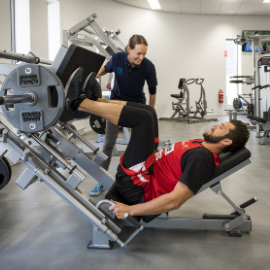
A strength and conditioning program might not be on the top of the list of priorities for most runners, but it is an important part of training that shouldn’t be missed. Appropriate running drills and functional resistance exercises will improve muscle strength and endurance, improve running economy and provide some resistance to injury.
You don’t have to spend hours and hours in the gym to see a benefit. Consistently doing 30 minutes of the correct type of strengthening exercises at least 2-3 times per week can be enough to reduce your chances of injury and potentially improve your performance.
Not sure what strengthening exercises you should be doing? Our physiotherapists can help with that. Your physio will assess you to identify any areas that you need to work on and create an individualised and appropriate strength program that will complement your running and fit in with your schedule. MTM Physiotherapy Warwick also have physiotherapist run Clinical Pilates classes (mat and reformer) which are a great way to incorporate some resistance training into your week.
6. Maintenance
To keep your body running efficiently and injury free it needs regular maintenance. This may include regular self massage/release (think about getting a foam roller and a spiky ball) and specific stretches for areas prone to tightness, regular strengthening exercises (see above) and/or seeing your physiotherapist for manual therapy and advice to keep on top of muscle tension and joint stiffness. How much maintenance can differ between individuals and can depend on age, gender, training loads and work loads.
7. Appropriate footwear
Ensuring you have appropriate footwear is important. If your shoes are very old or worn out they won’t provide you with as much support and won’t assist you in the way they are intended to. It is recommended that you change your running shoes approximately every 600-800km’s.
Footwear has become a debatable topic and information about running shoes can be confusing. Supportive/cushioned shoes or minimalist shoes? Over-pronator, under-pronator, neutral? What does it all mean?
Foot anatomy and function is highly individual and so is the shoe that suits you best. The most important thing is that the shoe feels comfortable (if it feels right, it probably is!), that it is fitted correctly (in terms of length, width and depth) and it has the correct level of support for you.
A recent study has found that in runners weighing over 71kg, the risk of injury is greater in minimalist than maximalist running shoes. So if you are considering trying the more minimalist option, take this into account and ensure that your transition is very gradual to allow the muscles in the foot and the ankle time to adapt and strengthen.
If you are unsure about what footwear is right for you, your best option is to see your podiatrist and/or physiotherapist for professional assessment and advice.
8. Ask for help
Don’t be afraid to ask for help. There is no niggle too small to see your physiotherapist. It’s always much easier to get on top of an issue early on, rather than waiting until it’s worse.
A lot of runners might not want to see their physiotherapist because they don’t want to be told to stop running. However, in most cases if the niggle or injury is caught early, running may need to be modified but not always completely stopped. Your physiotherapist can assess the area of concern and provide you with the best professional advice about this.
As physios, we love proactive patients who come to see us to learn how to prevent an injury and improve their running performance. In this instance, a running musculoskeletal screening and running gait analysis can be carried out to identify any risk factors for injury or any potential areas for improvement. From this a management plan and exercise program can be developed to reduce your chance of injury and help you to achieve your running goals!
HAPPY RUNNING!
Article by Rachael Dodds

Ask a physio
Not sure whether you are appropriate for Physiotherapy?
Fill out the form and one of our physiotherapists will be in touch with you within 24 business hours.
Follow us on